
How we investBuilding net worth
How does Ocean Ridge screen a niche nobody else is in?
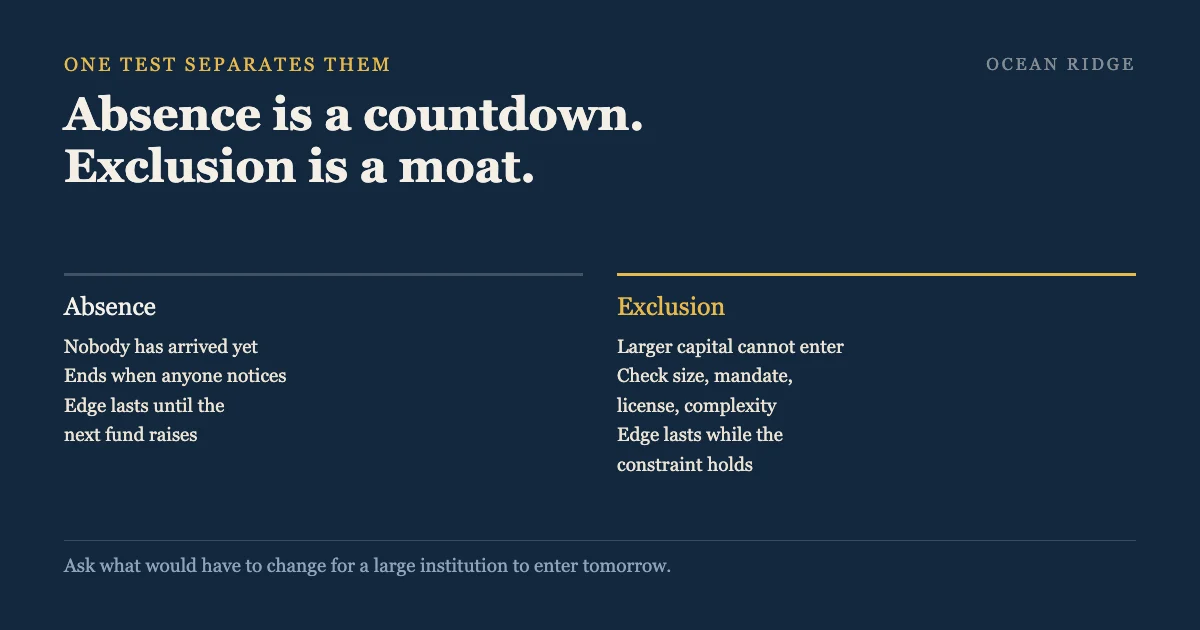
We ask why nobody else is there.
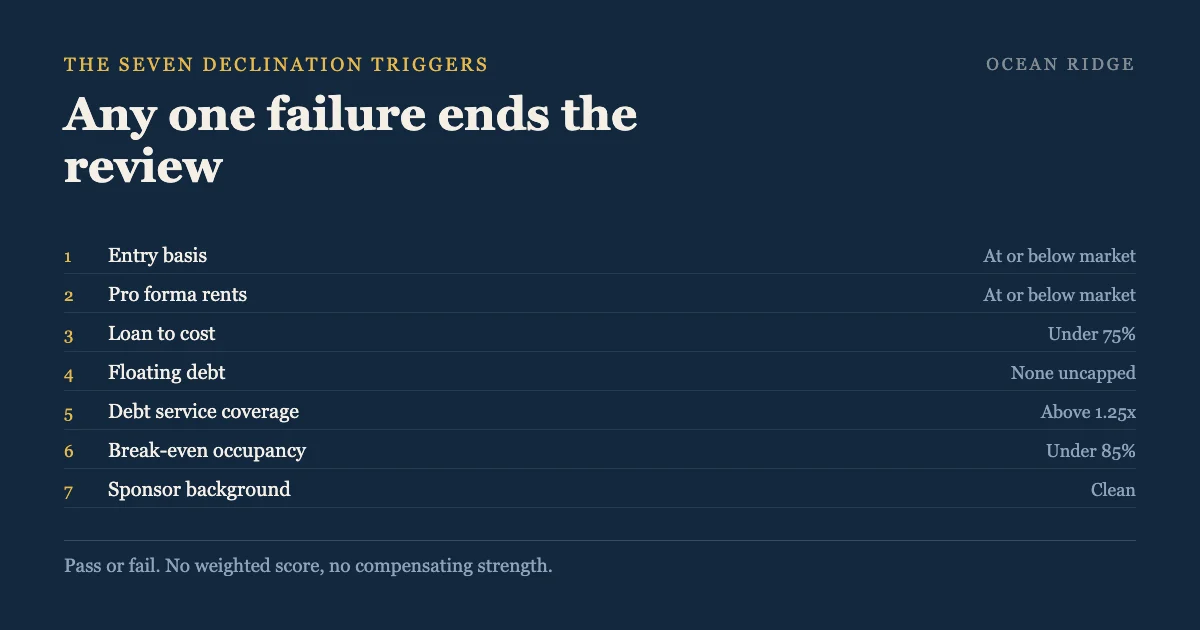
Declination triggers are seven pass/fail tests we run on every real estate equity deal before we spend a day on diligence. They cover price, rents, loan size, debt type, debt coverage, break-even occupancy and the sponsor’s record. Fail one and we pass. So no real estate deal reaches you with a failed gate, and any gate that needed a closer look is shown to you in writing.
For educational purposes only. Nothing on this page is investment, legal or tax advice, and nothing here is an offer to buy or sell any security. Ocean Ridge Capital Partners, LLC is not a registered investment adviser, broker-dealer, law firm or accounting firm.
You want to know what we actually say no to. Every sponsor calls its process rigorous. The better question is what would stop them, written down before they fall for a deal. That is what these gates are. We set them in advance so a good story can never outvote a bad number.
| # | Gate | What it checks | To pass |
|---|---|---|---|
| 1 | Entry price | What is paid vs. what it is worth | At or below market value |
| 2 | Rents | The sponsor’s projected rents | At or below today’s market |
| 3 | Loan to cost | How much of the cost is borrowed | Under 75% |
| 4 | Debt structure | Whether the interest rate can run away | No floating rate without a cap |
| 5 | Debt coverage | Income vs. the loan payment | Above 1.25x |
| 6 | Break-even occupancy | How full it must be to pay its bills | Under 85% |
| 7 | Sponsor background | Track record, lawsuits, past investors | Clean |
Gates one and two are about price, because no amount of good work fixes paying too much. Three through five are about the loan, because debt is what turns a bad year into a lost property. Six is your margin for error. Seven is the people.
Break-even occupancy is how full a property has to be to cover its loan and its bills. Under 85% means that even with 15% of the units empty, it still covers the loan. Projected returns tell you what happens if things go right. Break-even tells you how much can go wrong and still leave you whole.
Each gate comes out one of three ways. Clear means it passes. Fail means we pass on the deal. Qualified means it misses today for a reason we understand, with a dated fix we can check, and we say so in writing before anyone invests.
On Patriot Fund V, the most recent fund we invested in alongside our investors, six gates were clear and one was qualified. The qualified gate was debt structure. 15 of the fund’s 16 loans were fixed-rate, and one floating-rate bridge loan was being refinanced. That is on the deal page, in the same table investors saw before they invested.
No. Each asset class gets its own screen, built around how it makes and loses money.
| Asset class | How we screen it | Read more |
|---|---|---|
| Real estate equity | The seven declination triggers, then full diligence | This page |
| Private credit | Cushion under your dollar, fund borrowing, loan length, real losses, recovery | #42, #43 |
| Alternatives | The “why is it uncrowded” test, then the same discipline | #52 |
| Oil and gas | A separate screen built around the operator and the wells | #53 |
A standard you will not name is one you can quietly drop. So we publish ours.
Gate seven is the one most investors skip. Operating history, lawsuits and how past investors came out are all checkable, but by the time most people read the offering documents they already want the deal to work. We check it anyway.
Some deals we pass on will do fine without us. That is the cost of having a rule, and it is why the deals that reach you are worth a look.
These gates are built for income-producing real estate, like apartments, mobile home parks and storage. They do not fit ground-up development, where the risk sits in the construction schedule, or a distressed purchase, where the low price is the whole idea. Other asset classes use the screens in the table above.
It is the loan divided by the full cost to buy and improve the property. Under 75% means the owners’ equity takes the first quarter of any drop in value before the lender is touched.
When rates jumped in 2022, uncapped floating loans repriced fast and broke a lot of deals. A cap puts a ceiling on the interest bill.
The property’s income is 1.25 times its loan payment. Income can fall about 20% and still cover the loan.
No. A fail ends the review. A qualified gate is different, and we show it to you with the reason and the fix.
If you are weighing a deal this year, book an investor strategy call.
Published · Last reviewed
Next step
Not ready to talk? Take the investor quiz and we will send what fits.
Keep reading
How we investBuilding net worth
We ask why nobody else is there.
How we investBuilding net worth
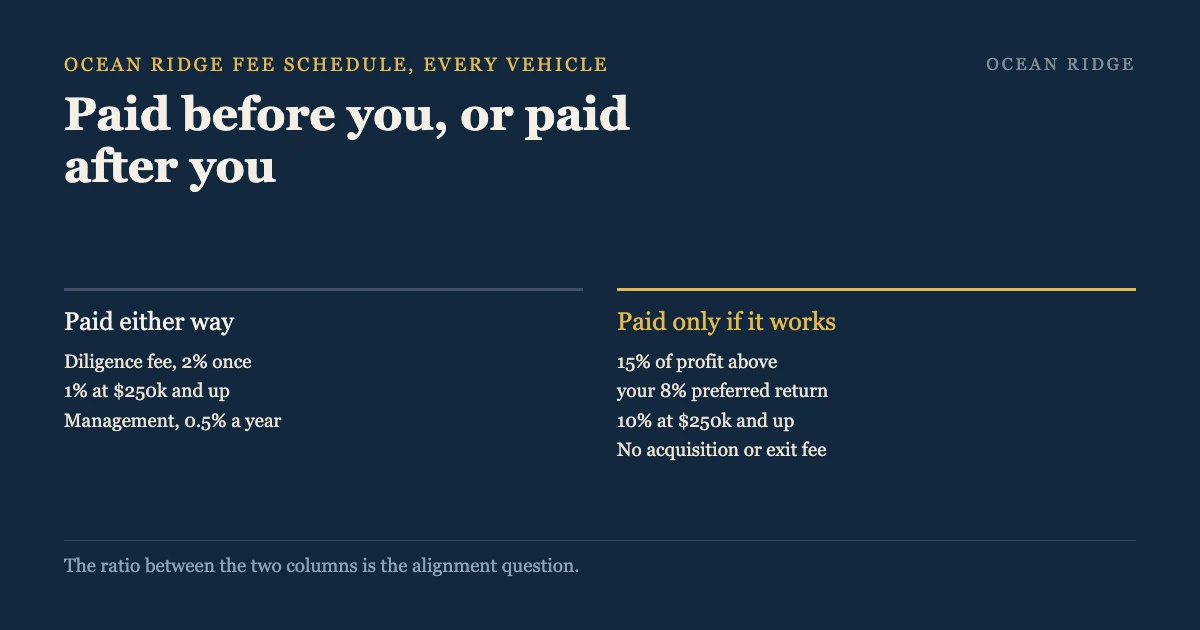
On our most recent equity vehicle, three ways.