

Real estateTax efficiency
Can depreciation from a new real estate investment offset a large capital gain from selling my business or land?
It can, depending on the kind of gain.
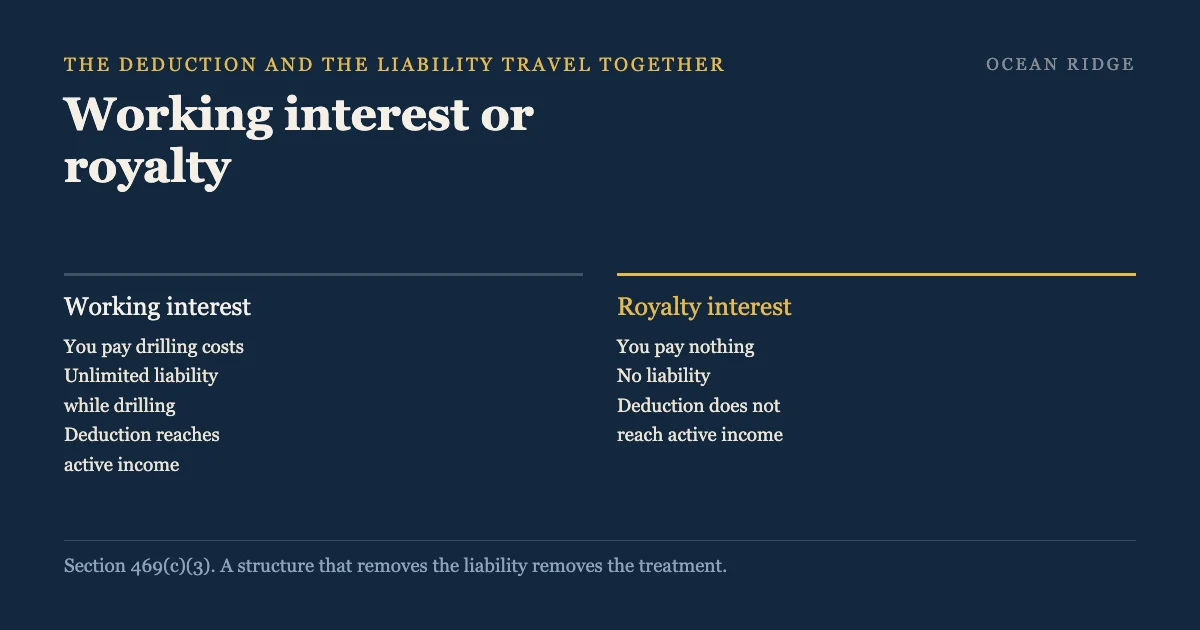
Yes, in a specific way. Some investors may, depending on their situation, deduct intangible drilling costs from a working interest against W-2 or business income, which real estate losses usually cannot reach. The trade-off is drilling risk and general partner liability during drilling, which many programs manage with insurance and a later switch to limited partner.
For educational purposes only. Nothing on this page is investment, legal or tax advice, and nothing here is an offer to buy or sell any security. Ocean Ridge Capital Partners, LLC is not a registered investment adviser, broker-dealer, law firm or accounting firm.
You earn a lot from your company or your salary, and you have found out real estate losses will not touch it. Oil and gas keeps coming up as the exception. It is one, written into the tax code rather than argued into it. What usually gets left out of the pitch is what you accept in exchange, and that is the part worth understanding first.
Intangible drilling costs are the costs of drilling a well that cannot be salvaged, like labor, fuel, drilling fluids and site prep. They are usually most of what a well costs, and they can generally be deducted in the year they are spent rather than over time.
The key is the type of deduction, not just its size. Section 469(c)(3) of the tax code says a working interest in oil or gas held directly, or through an entity that does not limit your liability, is not a passive activity. IRS Publication 925 adds that it does not matter whether you materially participated. That is why the loss can reach active income when a real estate loss usually cannot.
| Working interest | Royalty interest | |
|---|---|---|
| You pay drilling and operating costs | Yes | No |
| Liability while drilling | Unlimited, often insured | None |
| Deduction can reach active income | Often | No |
| Who usually holds it | Participating investors | Landowners, heirs, buyers |
The deduction and the liability travel together. A structure that removes the liability usually removes the tax treatment people came for.
Four things to understand before you invest.
There is also a tail. Publication 925 explains that once a working interest loss is treated as non-passive, later income from that property is not passive either, so passive losses you are carrying cannot shelter it. If your interest converts during a year, the timing matters, so confirm it with your CPA.
For a founder with high active income, this can be one of the most useful tools available. Done right, with a strong operator and wells spread out, it puts money to work in a real asset and can cut this year’s tax bill for the right investor. It is also often sold on half the story. We tell both halves. The deduction is real, and for some investors it can reach income real estate cannot. You take on drilling risk, and some liability, to get it.
Our test is simple. Take the tax break out and ask whether you would still buy this well, at this price, with this operator. If not, the deduction is not making it a good investment. It is making a bad one easier to say yes to. The tax benefit should be your second reason to invest, never your first.
If you have little active income to offset, the main benefit mostly disappears and you are taking drilling risk for an ordinary return. If liability during drilling is a deal-breaker, a royalty avoids it and gives up the deduction with it. It does not work inside a retirement account, where there is nothing to deduct against and other tax rules can make it worse. And in a year your income is unusually low, the deduction is worth less.
Federal tax law specifically excludes working interests held without liability protection from the passive activity rules. Confirm the current position with your CPA.
A well that does not produce enough to be worth running. The costs are generally deductible, but the money is gone. That is the risk the deduction compensates for.
An ongoing deduction for using up the reserve as it is produced, separate from the first-year drilling deduction.
Usually not, and this detail trips people up. Holding the interest through an entity that limits your liability generally puts it back under the passive rules.
Not yet. We are underwriting several sponsors now, with the same discipline we use everywhere else. If we open one, the people on our list hear first.
If you are weighing a deal this year, book an investor strategy call.
Published · Last reviewed
Next step
Not ready to talk? Take the investor quiz and we will send what fits.
Keep reading
Real estateTax efficiency
It can, depending on the kind of gain.
How we investBuilding net worth
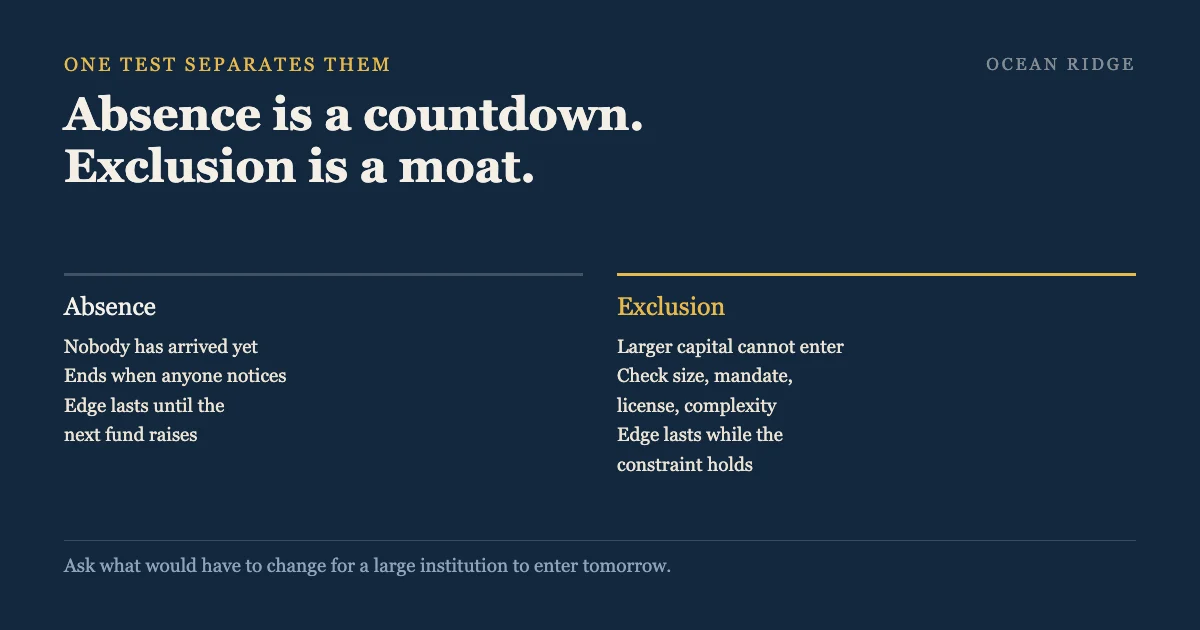
We ask why nobody else is there.