
Private creditPassive income
How does Ocean Ridge evaluate a private credit fund?
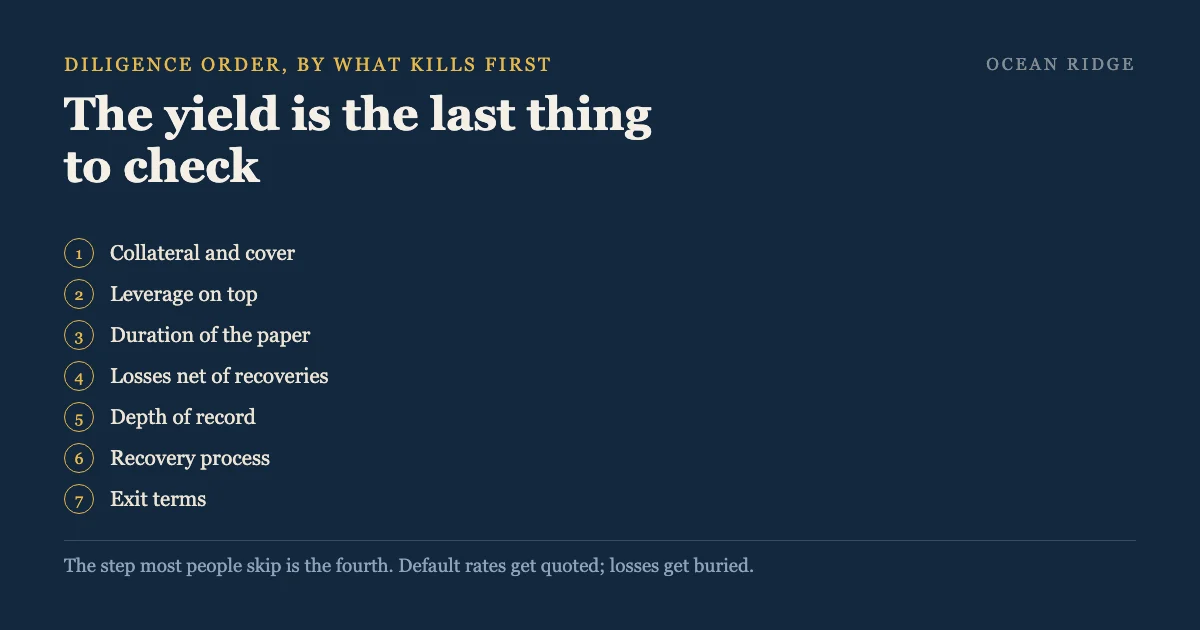
We set the headline yield aside, because they all quote about the same number.
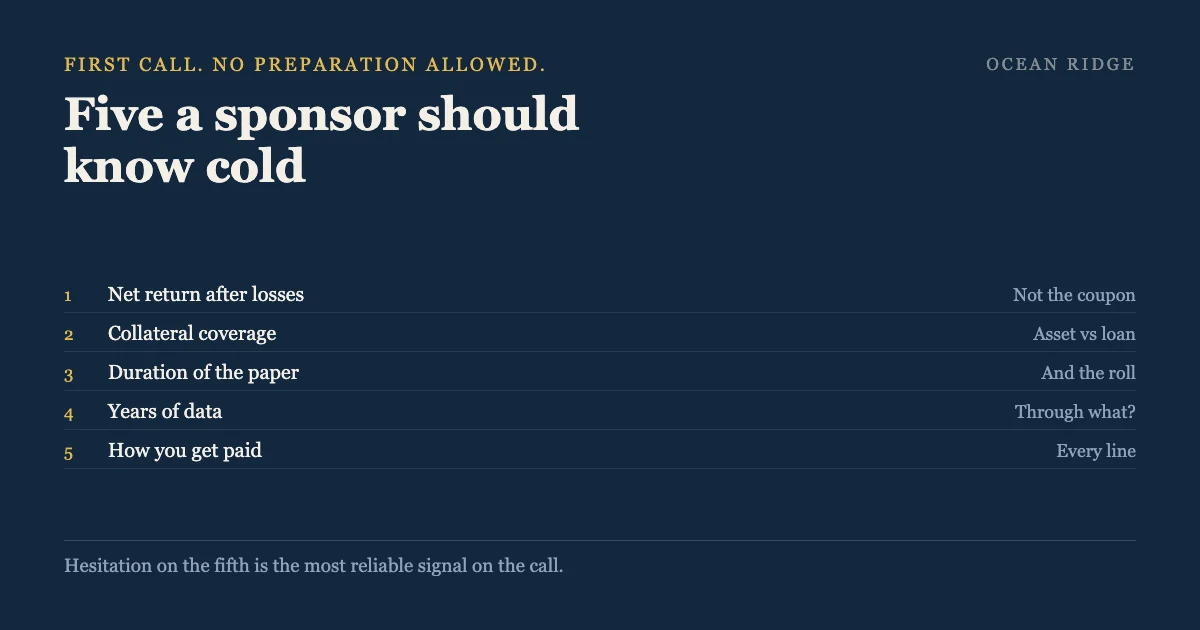
Ten, across two calls. Five a sponsor should answer without looking anything up, because anyone running the book knows them cold. Five that need documents and a follow-up. How somebody handles the first five tells you more than the numbers in the second five do.
For educational purposes only. Nothing on this page is investment, legal or tax advice, and nothing here is an offer to buy or sell any security. Ocean Ridge Capital Partners, LLC is not a registered investment adviser, broker-dealer, law firm or accounting firm.
You want a checklist you can hold in a meeting without looking like you are reading from one. Underneath that is something more useful: you are trying to work out whether this person actually runs the book or sells it. Those two people answer the same questions differently, and the difference shows up in the first five minutes if you know what to listen for.
Anyone running a credit book answers these from memory. If they cannot, you have learned the most important thing on the call.
Listen for precision rather than enthusiasm. "Low seventies loan to value, high sixties on the newer vintage" is an answer. "We are very conservative on leverage" is not, and it is the more common one.
These need the offering documents and a day of preparation. Ask them in writing.
What you are entitled to receive in a private offering is framed by Rule 502(b), and statements made to prospective investors in a pooled vehicle fall under 17 CFR 275.206(4)-8. These are fair questions and a written answer is a reasonable thing to expect.
Three patterns, and none of them is about the numbers.
The Fed’s Financial Stability Report for May 2026 is useful background for question ten, since it records what happens to redemption windows in a stressed quarter. Ask the question while the quarter is calm.
One closing note on how to use the list. Do not send it in advance. A prepared answer to question five is a drafted answer, and the whole value of the first call is hearing the version that has not been through anybody’s compliance review.
Our view is that diligence on a credit manager is mostly a character assessment with numbers attached. The figures can be checked later and often are. What cannot be recovered later is the impression of how somebody behaves when asked something inconvenient, and that is available for free on the first call.
We run these in the order above deliberately. The unpreparable five come first because the point is to hear the unrehearsed version. Sending the full list in advance gets you a better-researched answer and a worse read on the person.
We also treat question five as the one that sorts the field. Everything else has a defensible range. Fees have a single correct answer that the manager already knows, so reluctance there is never about the difficulty of the question.
None of this works on a feeder or a platform, where the person on the call is not the person running the book and cannot answer five of the ten. There the list has to be put to the underlying manager, or the platform has to pass it on. It also reads differently for a very new fund, where several answers do not exist yet, and the honest response is to say so rather than to produce a number from a model.
That is an answer. A manager who will say something on a call and not in an email has told you how much weight the sentence carries.
No, and the reaction to it is informative. Every manager knows their own fee schedule, so discomfort is about the content rather than the question.
Roughly half. Fees, concentration and track record carry over. Collateral coverage, recovery rates and redemption terms are credit questions and do not.
Then you have a manager worth diligencing properly, which is where documents, references and other investors come in. Ten questions open the file rather than close it.
No. The first five are for the first call precisely because they are unprepared, and the second five need documents. Splitting them is part of the test rather than an inconvenience.
If you are weighing a deal this year, book an investor strategy call.
Published · Last reviewed
Next step
Not ready to talk? Take the investor quiz and we will send what fits.
Keep reading
Private creditPassive income
We set the headline yield aside, because they all quote about the same number.
Private creditPassive income
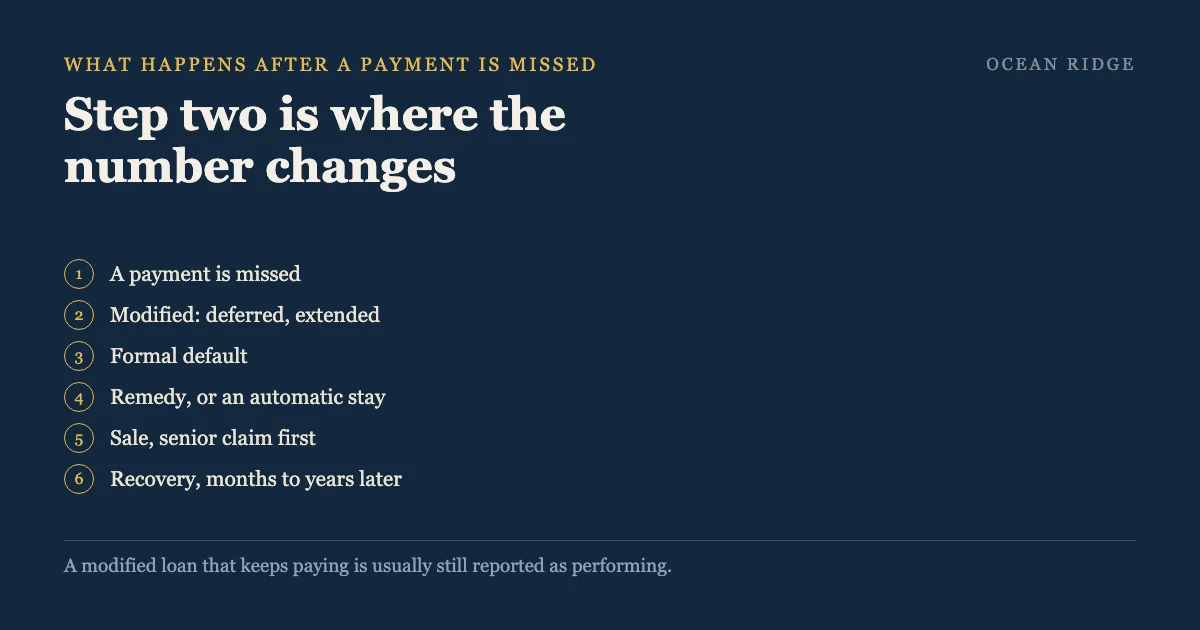
Defaults are normal.