
Real estatePassive income
Is my money liquid? What if I need it back early?
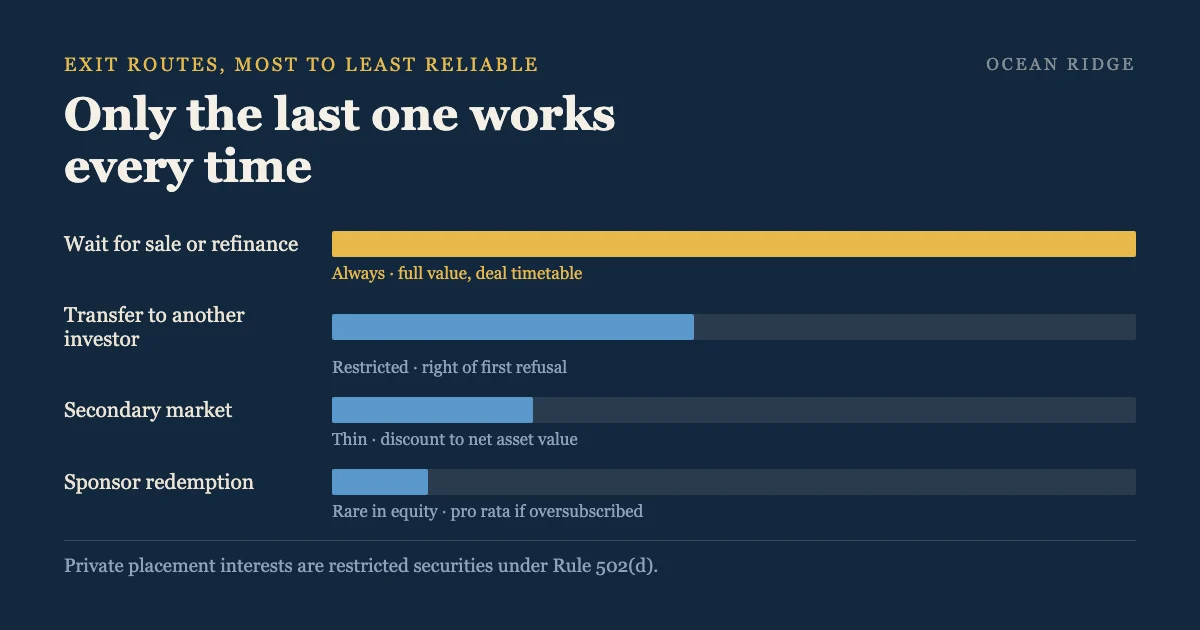
Not in a private real estate deal, which usually runs three to ten years.
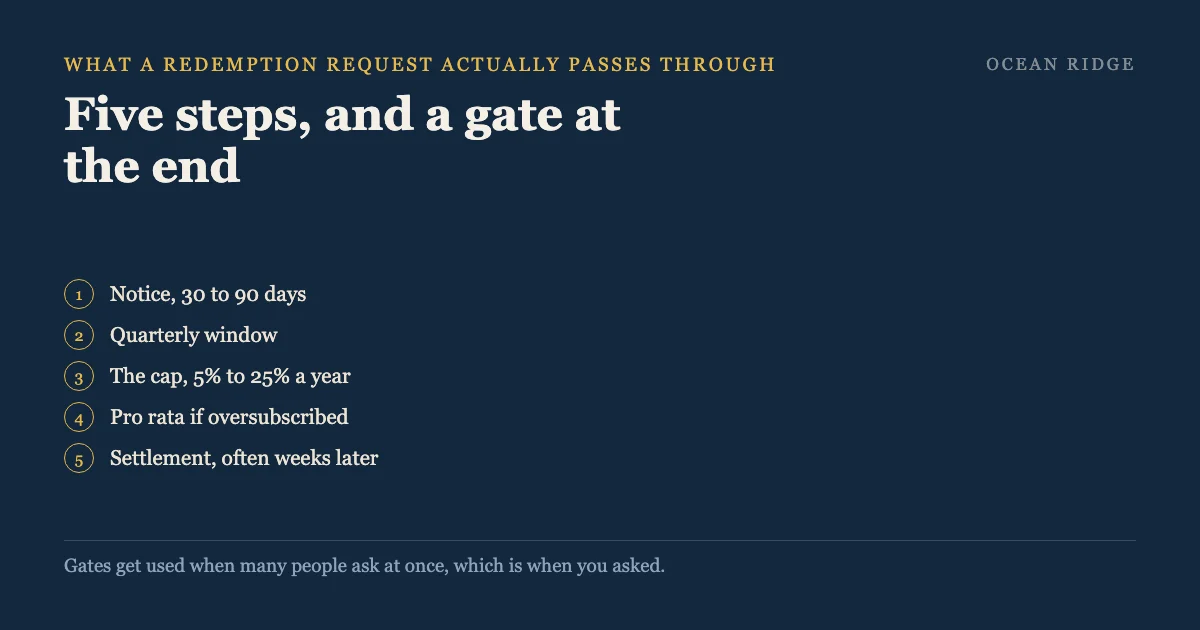
Usually more liquid than real estate. Private credit loans pay back on their own schedule, commonly within 90 days to three years, and most funds let you request money back quarterly with notice, often after an initial lockup. Each window has a limit on how much can leave, so size your position so you never depend on one.
For educational purposes only. Nothing on this page is investment, legal or tax advice, and nothing here is an offer to buy or sell any security. Ocean Ridge Capital Partners, LLC is not a registered investment adviser, broker-dealer, law firm or accounting firm.
You are putting money outside your company so it can pay you and stay within reach. Private credit is often the most liquid part of a private portfolio. The useful question is how that liquidity works, and what happens when a lot of investors want out at the same time.
Terms that match the loans. A lockup is not a red flag. It is a fund being honest that loans take time to pay off. Look for loans that pay back on a steady schedule, so cash keeps coming in to fund withdrawals, and redemption terms written clearly enough that you can predict them. If the loans run two to three years, be wary of a fund promising easy quarterly cash in any market.
A gate pauses or limits withdrawals. It exists so a fund is not forced to sell loans cheap to pay the people leaving, and it protects the investors who stay. Read what triggers it, who decides, and whether that call is made by formula or at the manager’s discretion.
Gates are used in real markets. The Federal Reserve’s May 2026 Financial Stability Report noted that some non-traded business development companies limited withdrawals after a rise in redemption requests, and judged the risk to the wider system manageable.
Thinner than the redemption window. When a sale happens, the manager usually arranges it, often at a discount, with the fund or other investors getting the first right to buy. Interests sold in a private offering are restricted securities under SEC Rule 502(d), so a private sale is a negotiation, not a trade.
Private credit is often the most liquid part of a private portfolio, and that is a real advantage for founders who want income and flexibility outside their company.
We still size positions as if the window did not exist. Then whatever liquidity you get is a bonus, not a bet. A position you are comfortable leaving alone is the one that keeps paying you through a rough quarter.
Very short-term lending is the most liquid of all, since loans pay off fast enough that capital comes back on its own. Listed credit funds trade daily but carry price swings that private marks hide. And a fund with a long initial lockup behaves more like real estate than its label suggests.
Commonly 5% to 25% of the fund a year, sometimes stated quarterly. It is in the offering documents.
Usually within weeks. Some funds hold a small part back until the annual audit.
Generally yes. A stake in a single property usually has no buyback at all and comes back when the property sells (see <a href="/insights/can-you-exit-a-real-estate-fund-early">#24</a>).
Often, within what the documents allow. Read the amendment clause along with the redemption clause.
If you are weighing a deal this year, book an investor strategy call.
Published · Last reviewed
Next step
Not ready to talk? Take the investor quiz and we will send what fits.
Keep reading
Real estatePassive income
Not in a private real estate deal, which usually runs three to ten years.
Private creditPassive income
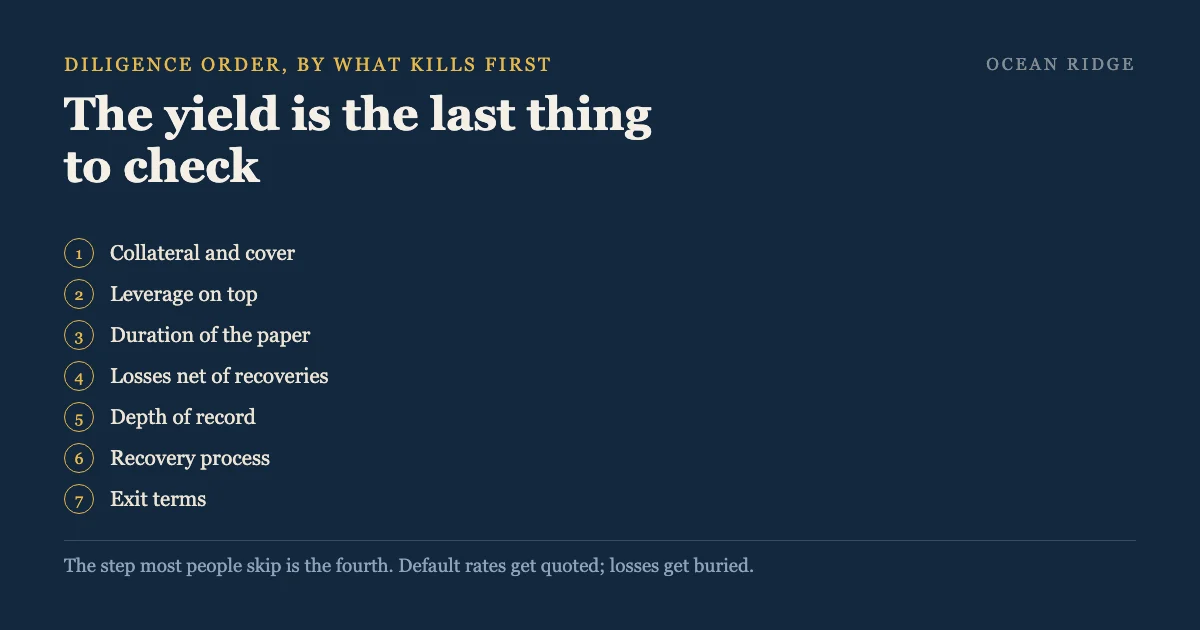
We set the headline yield aside, because they all quote about the same number.