
Oil & gasTax efficiency
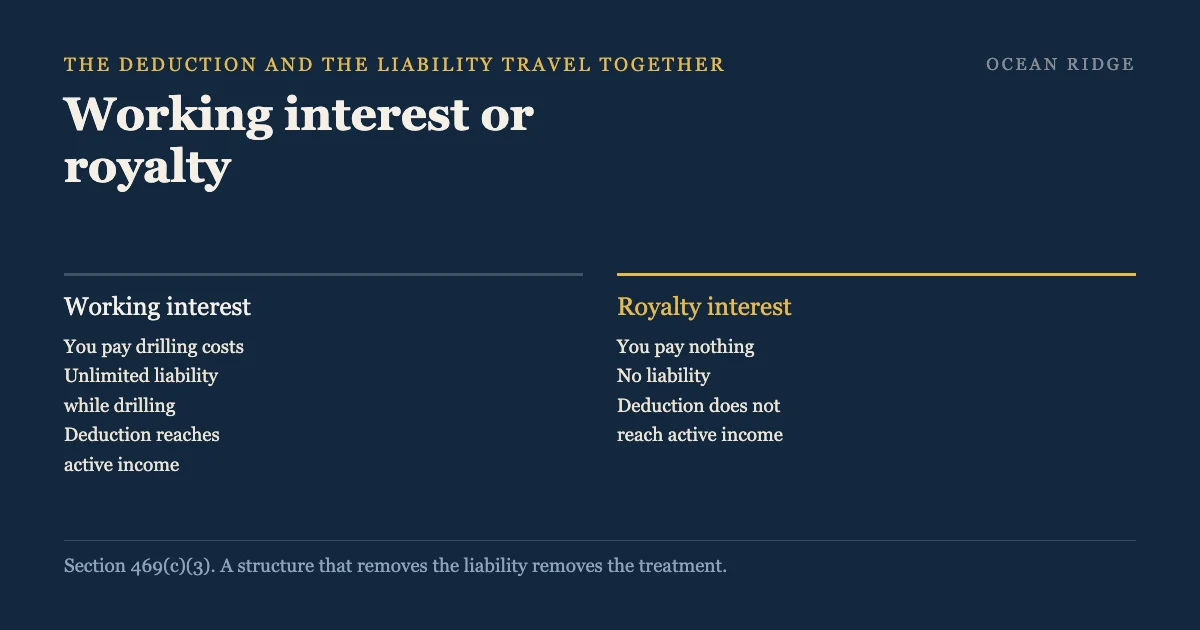
Can oil and gas investments offset your W-2 or business income?
Yes, in a specific way.
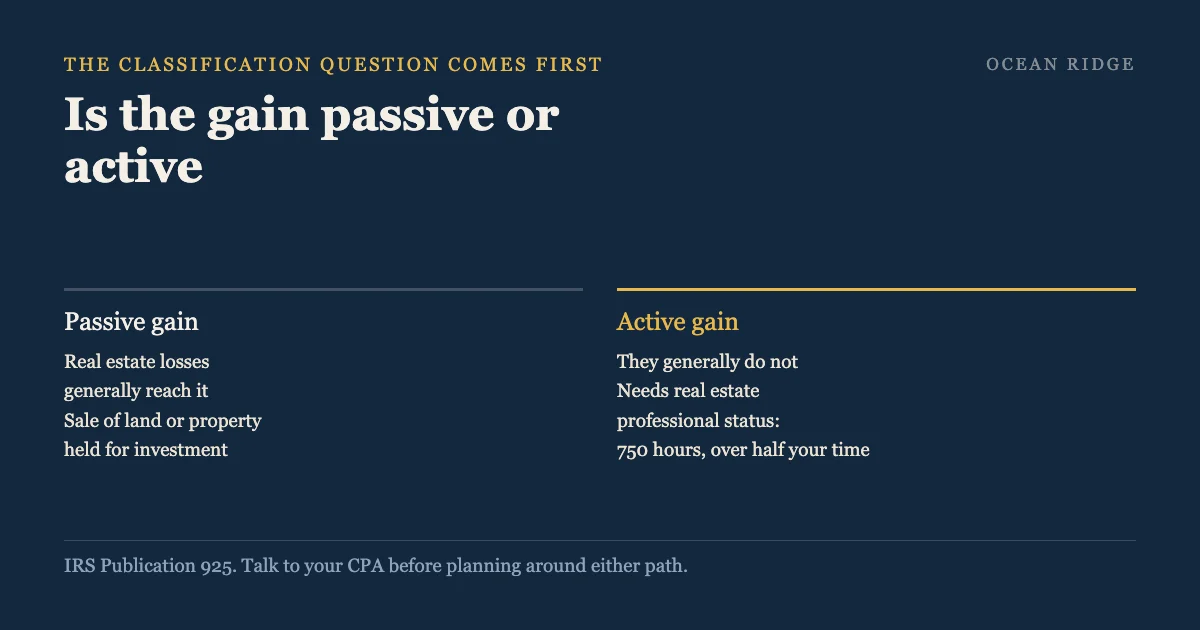
It can, depending on the kind of gain. Depreciation from a real estate investment usually creates passive losses, and some investors may use them to offset passive gains, like selling a rental property or a stake in a partnership they did not run. Real estate professionals may go further. For a business sale, company stock or land, other tools often fit, some of them real estate too.
For educational purposes only. Nothing on this page is investment, legal or tax advice, and nothing here is an offer to buy or sell any security. Ocean Ridge Capital Partners, LLC is not a registered investment adviser, broker-dealer, law firm or accounting firm.
You have sold, or are about to sell, a company or a piece of land, and a big gain lands this tax year. You have heard real estate can soften the tax bill. It can, for the right gain and the right investor. The work is matching the tool to the gain before you pick a deal.
It starts with the kind of gain. These are general rules. Your CPA classifies your gain, and that decides which tools fit.
| Kind of gain | Can passive real estate losses offset it? | Tools worth asking your CPA about |
|---|---|---|
| Sale of a rental property, or a stake in an LLC or partnership you did not run | Generally yes | Real estate depreciation |
| Sale of a business you ran | Generally no | Real estate professional status, installment sale, oil and gas (#53) |
| Sale of C corporation stock | Generally no | Section 1202 small business stock, opportunity zone fund |
| Sale of land | Usually no | Opportunity zone fund, installment sale |
Say the gain is passive and you invest in a real estate deal the same tax year. Depreciation passed to you varies by deal, so both cases are shown.
| Hypothetical, same tax year | Conservative case | Base case |
|---|---|---|
| Assumption: passive gain on the sale | $500,000 | $500,000 |
| Assumption: amount invested in real estate | $250,000 | $250,000 |
| Assumption: first-year depreciation passed to you | 30% of the investment | 60% of the investment |
| Passive loss available this year | $75,000 | $150,000 |
| Share of the gain sheltered | 15% | 30% |
Hypothetical illustration only. Not based on any actual investment and not a projection of future results.
A bigger check, or a few deals, shelters more. Losses you cannot use this year carry forward to offset future passive gains. Depreciation lowers your cost basis, what the tax code counts as your cost, so some tax comes back when the property sells, but you keep and invest that money in the meantime.
Then the picture opens up. Real estate professionals who materially participate in their rentals, meaning regular, hands-on work, may treat the losses as non-passive, so they may offset other income too, within annual limits. IRS Publication 925 sets two tests. More than 750 hours a year, and more than half your working time, in real estate businesses. On a joint return, it can apply if either spouse meets both alone.
Most pitches stop at “real estate shelters your gain.” It is true for some gains and expensive for others. So we start where your CPA starts, with the kind of gain, then match it to the deals and tools that fit.
Even when depreciation cannot reach this year’s gain, it shelters the deal’s own cash flow and carries forward. Over a career of investing, that compounds.
Inside a retirement account there is no personal tax to shelter, so depreciation does nothing there. State taxes can differ from the federal picture. And none of this replaces your CPA’s read of your own return.
A study that splits a building into parts with shorter tax lives, so more depreciation lands in the early years.
Generally not for passive investors. Real estate professional status, short-term rentals you actively run, and oil and gas working interests (see <a href="/insights/oil-gas-offset-w2-income">#53</a>) are the main routes that can.
If you are weighing a deal this year, book an investor strategy call.
Published · Last reviewed
Next step
Not ready to talk? Take the investor quiz and we will send what fits.
Keep reading
Oil & gasTax efficiency
Yes, in a specific way.
Real estatePassive income
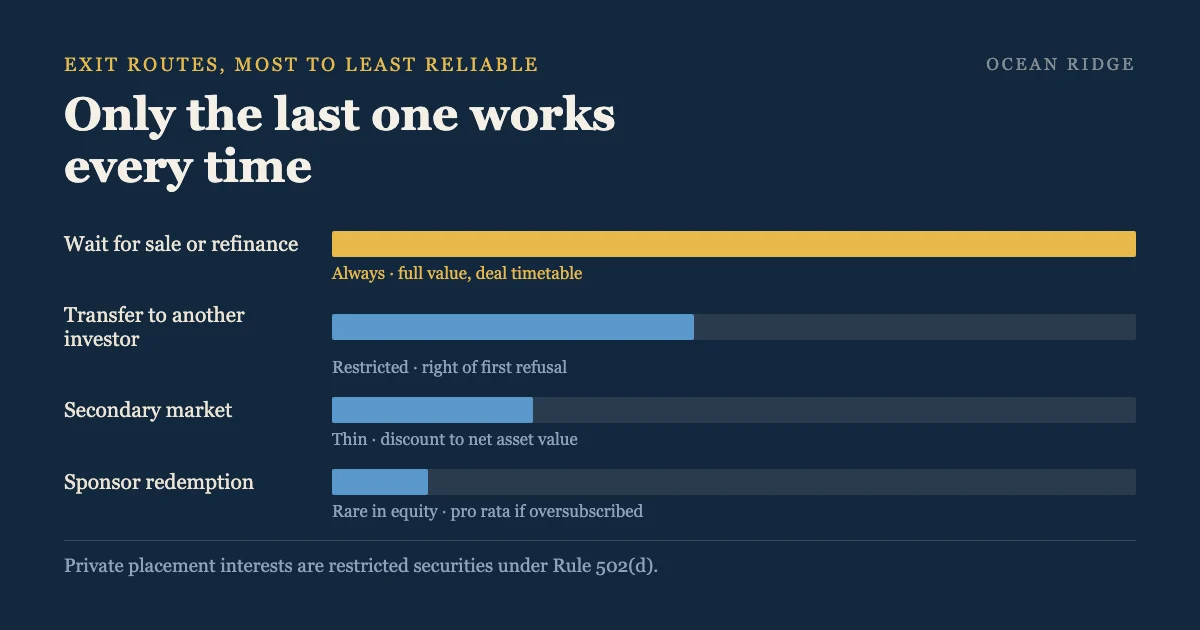
Not in a private real estate deal, which usually runs three to ten years.